The Third Eye of the Forest
Seven portraits of the leopard, one pine-cone-shaped gland, and the six-thousand-year-old human habit of seeing gods in spotted cats.
Half-Hidden, Wholly Sovereign
Some animals walk into a room. The leopard is already in it, draped along a branch above your head, waiting for you to notice. Of all the great cats she is the master of the slow reveal: the most widespread wild feline on the planet, and somehow the one you almost never see.
That talent for vanishing has fooled us. Because leopards turn up from African savanna to Asian forest, the world assumed they were doing fine. They are not. A three-year range-wide study found the species has lost as much as 75 percent of its historic range, and the International Union for Conservation of Nature (IUCN) lists the leopard as Vulnerable, with three subspecies ranked Critically Endangered.1
The fine print is sharper still. The IUCN suspects the Indian leopard has declined 24.5 percent over its last three generations. The Arabian and Indochinese leopards are Critically Endangered, the Persian and Javan leopards Endangered, and the leopard has disappeared from North Africa altogether.2 Couture this rare should not be this easy to lose.
The Rosette Collection
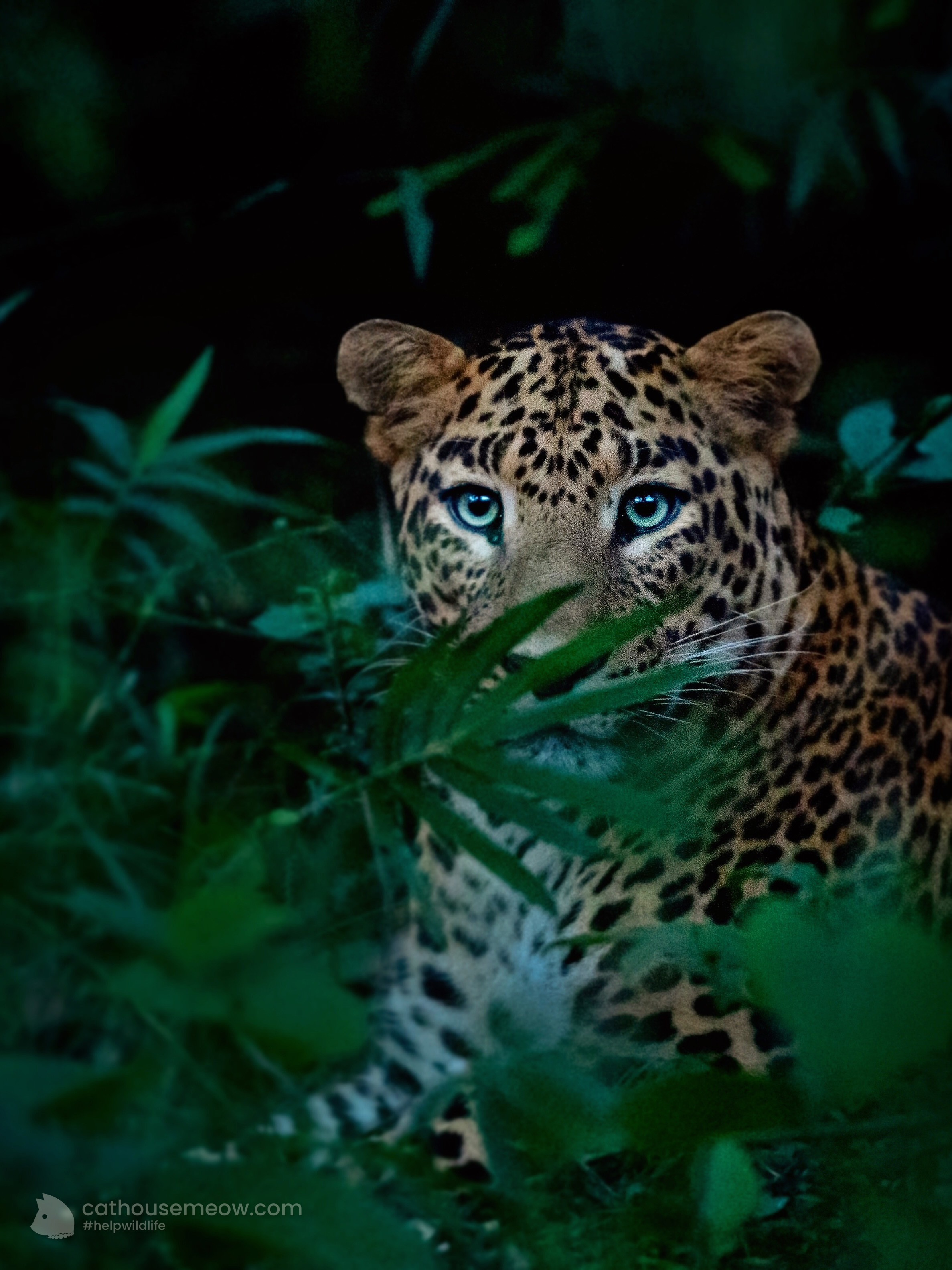
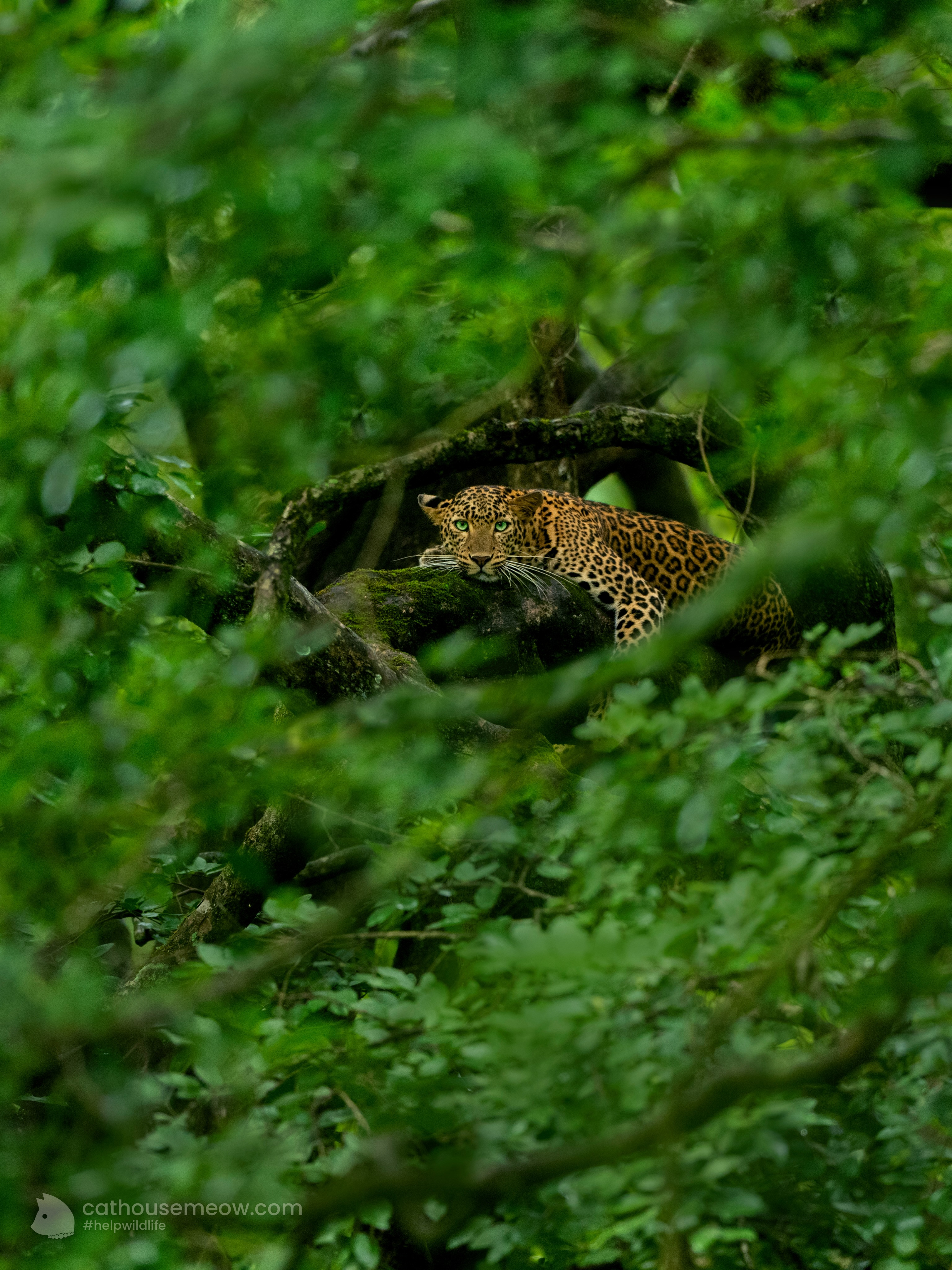
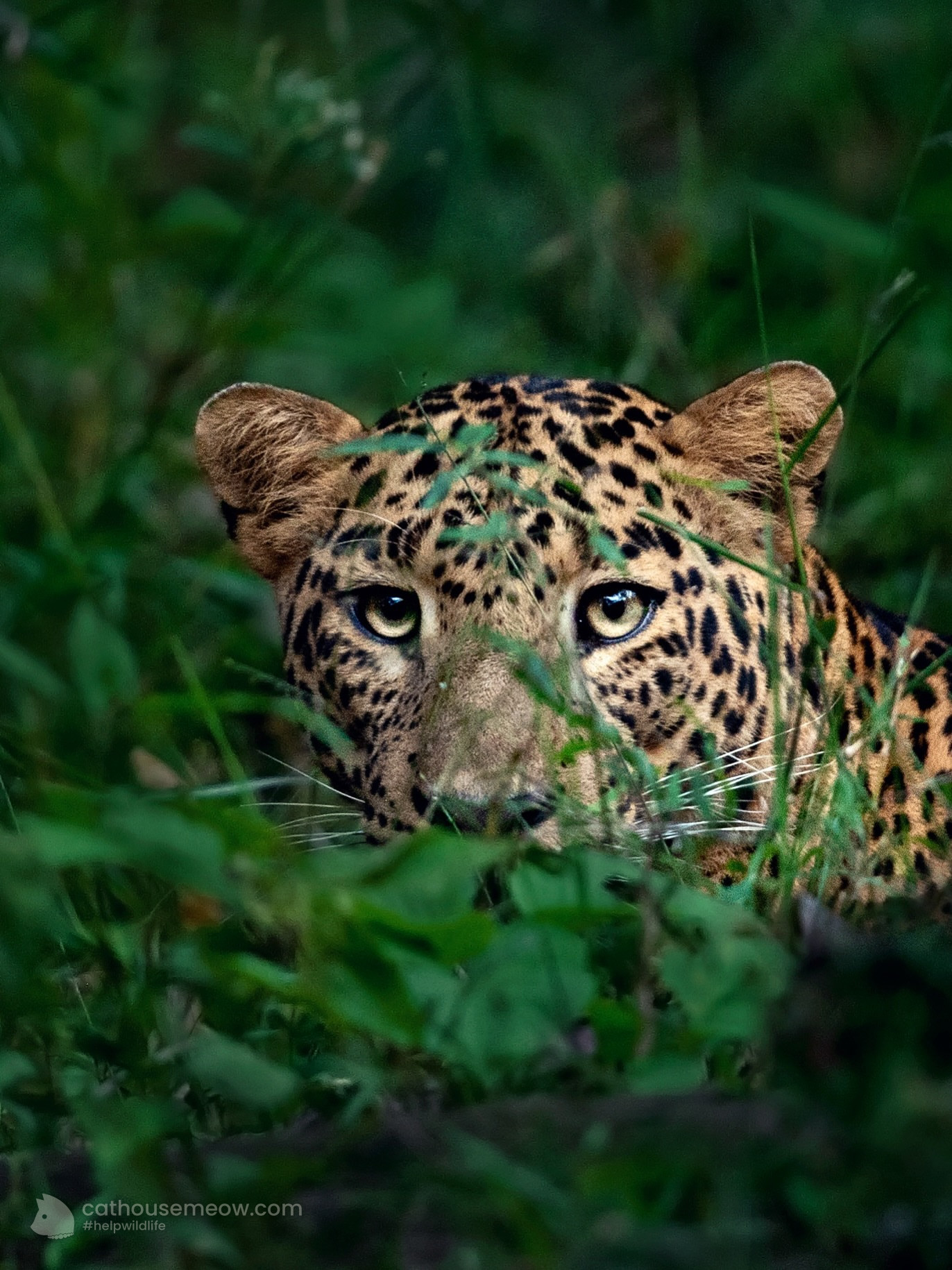
Tap any portrait to open it full screen. Stalk through the set with the arrows, or with your keyboard.
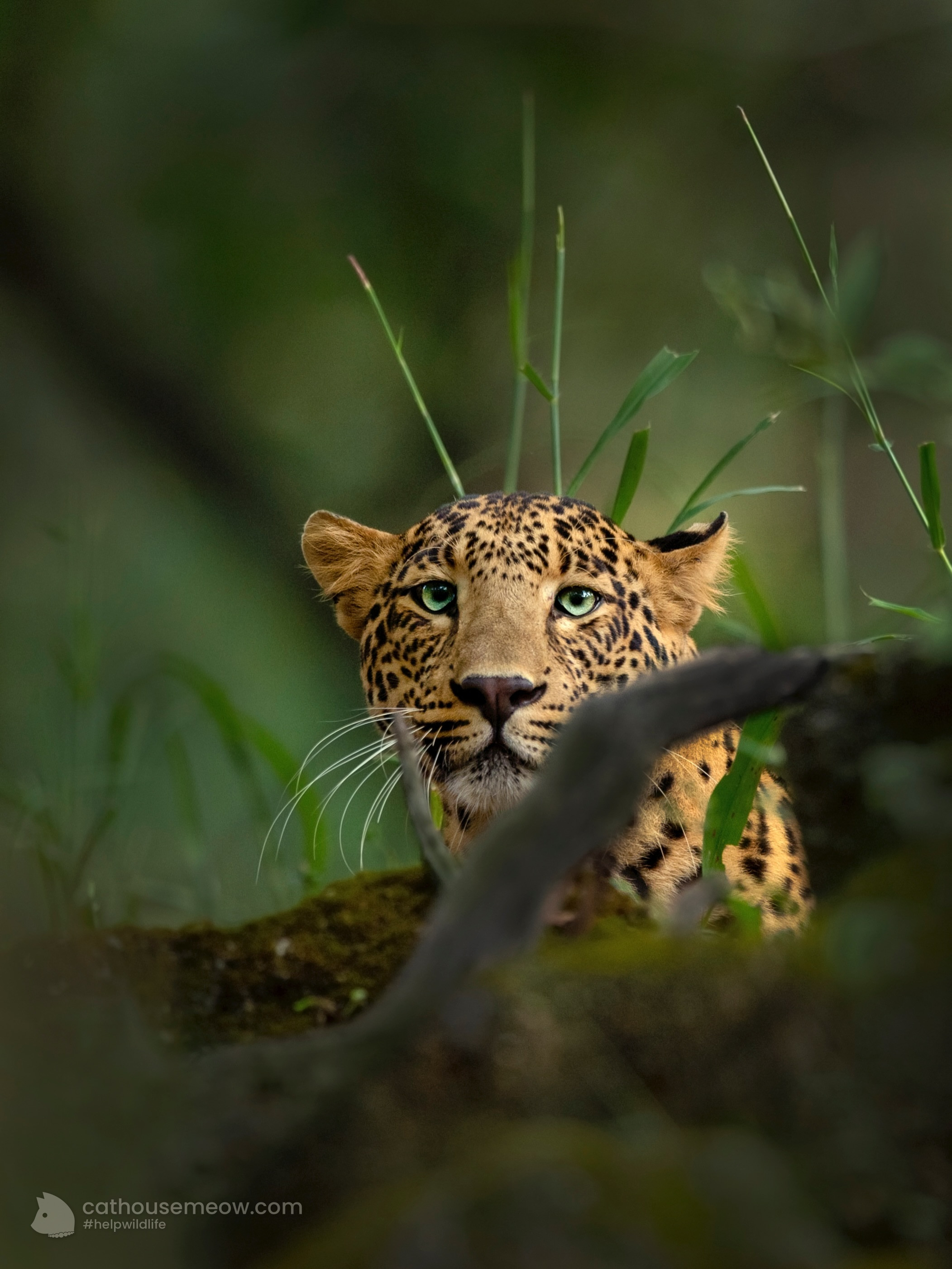
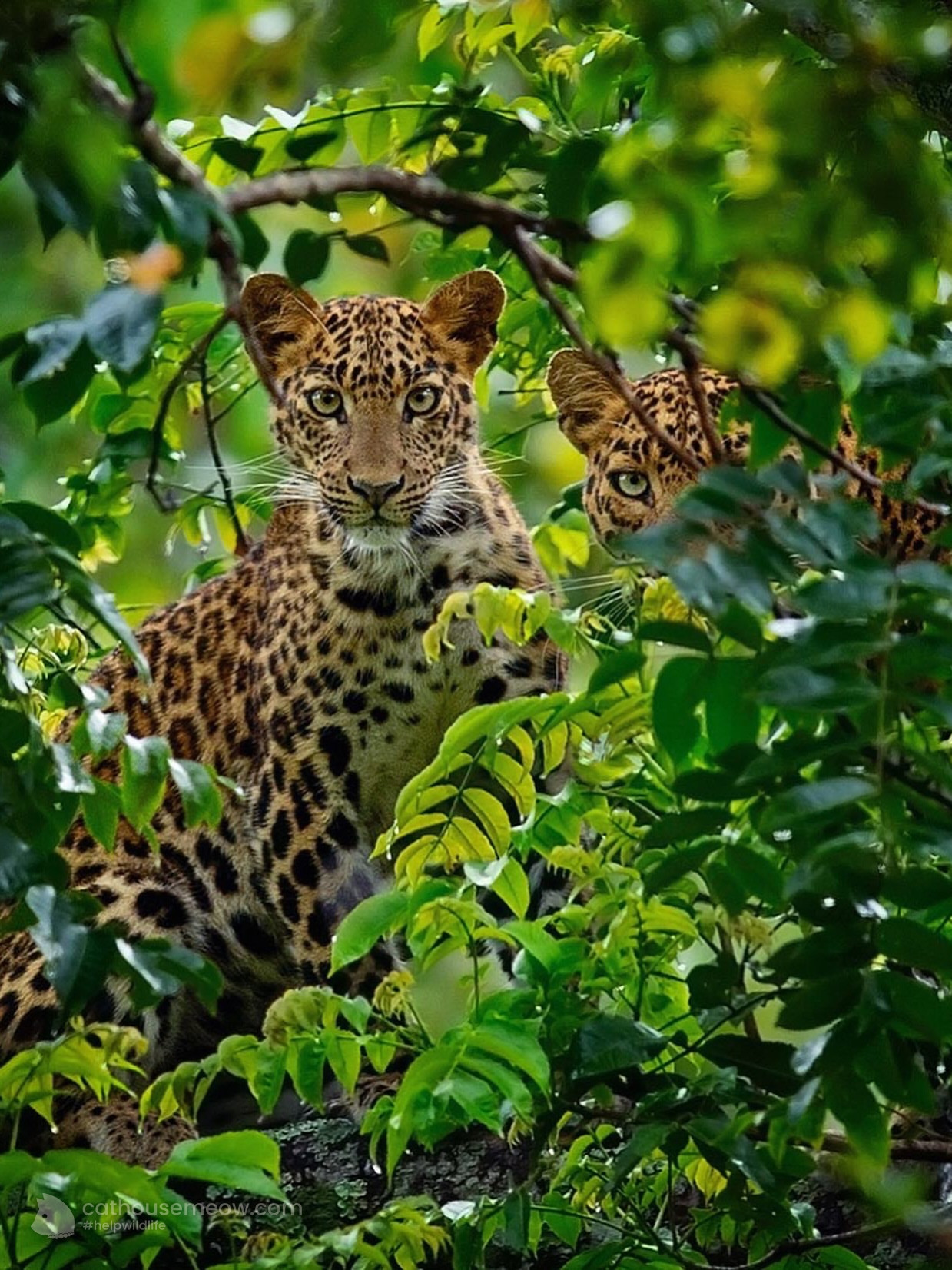
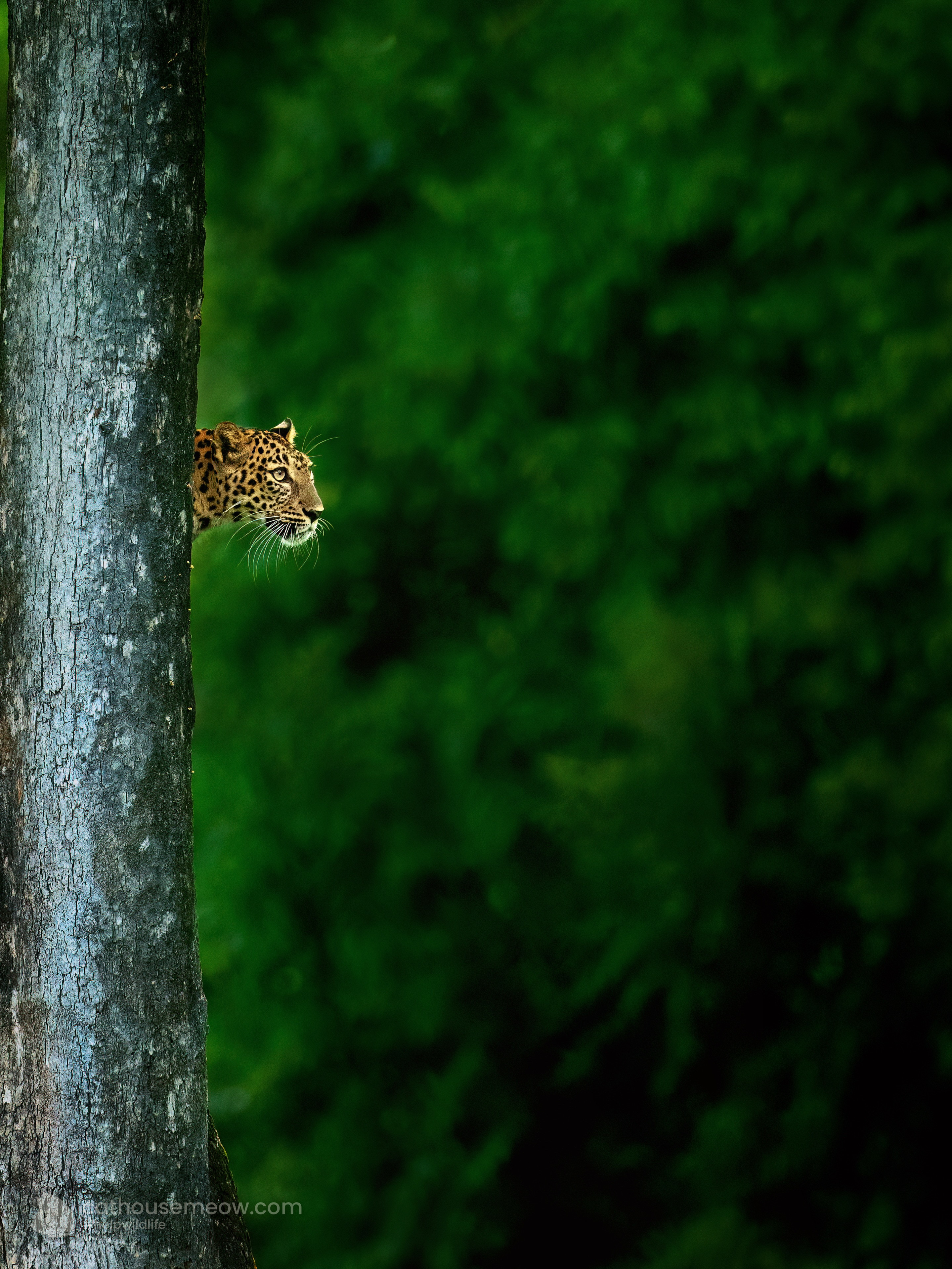
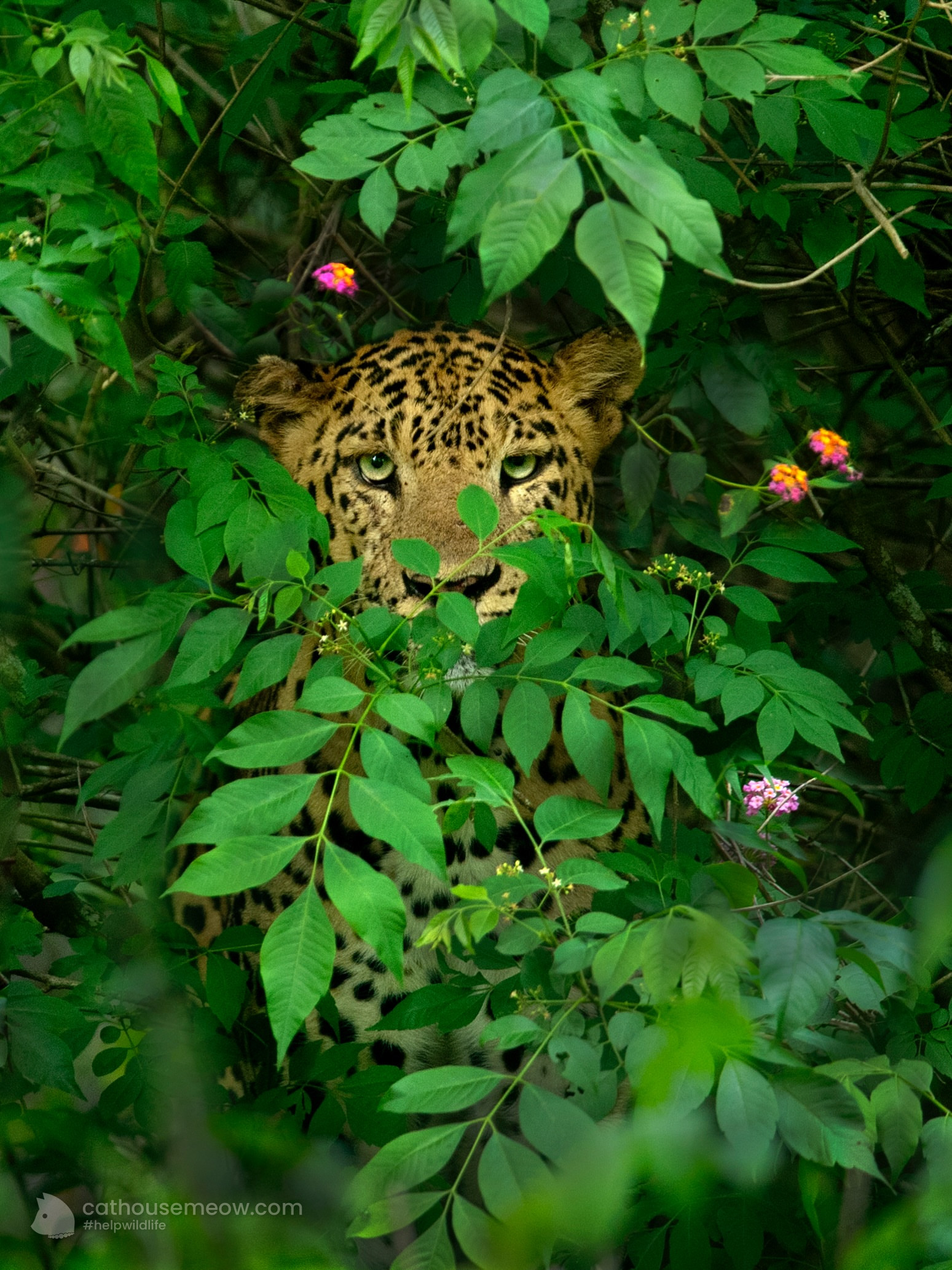
A Gland Shaped Like a Pine Cone
Deep in the centre of every cat’s brain, leopard and house tabby alike, sits a tiny structure named for its resemblance to a pine cone (in Latin, pinea). Philosophers called it the seat of the soul. Mystics called it the third eye. Biologists, less poetically, call it the pineal gland, and what it actually does is quietly extraordinary: it tells the body what time it is.
The gland turns light into chemistry. When the eyes report daylight, it idles; when darkness falls, it releases melatonin. Veterinary researchers at the University of Baghdad put it plainly: the pineal gland’s melatonin output follows a circadian rhythm, low by day and higher at night, and in female cats it helps govern ovarian activity, synchronising reproduction with the seasons.3
That is why day length matters so much to a cat. Turkish researchers studying the famous Van cats tracked how daylight stretching from 9.5 to 12.5 hours between December and April related to melatonin and the start of the breeding season.4 A Brazilian review of melatonin in companion animals calls its therapeutic potential worth further study, and concedes that even the size of the pineal gland across species is shaped by variables science has not yet pinned down.5 A mystery, in other words, with a lab coat on.
Try It: The Leopard’s Night Clock
Before You Raid the Medicine Cabinet
Melatonin is a hormone, not a treat. In cats it is studied under veterinary supervision; the Baghdad team, for example, tested a single implanted dose to suppress the heat cycle.3 Any dose for your own cat is a conversation for your veterinarian, never a guess.
A single, perfect profile: ear, eye, whisker, and a clock no one can see.
The Third Eye Exists. It Belongs to Lizards.
Here is where myth and anatomy shake paws. There really is a third eye in nature, just not on cats. Many lizards and the tuatara carry a parietal eye on top of the head: a structure grown from the pineal complex, with a lens and a simplified retina. It cannot form images, but it senses light, and it was once common among vertebrates before most lineages lost it.6
In 2025 the Argentine researchers Ricardo Romero and Flávio de Souza searched dozens of lizard genomes and found that the light-sensing proteins of this third eye travel with the eye itself. Lizards that lost the parietal eye, geckos among them, also lost most or all of those genes. Along the way the team identified a previously unknown and very ancient light-sensing gene, which they named lepidopsin.6
The cat, like us, kept the clock and buried it. Its third eye looks inward.
Two shadows in the canopy: one regal and direct, one a ghost of spots and curiosity.
Six Thousand Years of Seeing Gods in Spots
Long before anyone dissected a pineal gland, humans had already decided the leopard was a door between worlds. Tap through the eras.
Çatalhöyük, Anatolia
In one of the oldest towns ever found, in what is now Türkiye, households modelled leopard reliefs onto their walls in painted plaster. The many coats of plaster and paint on the leopard heads show the reliefs adorned homes for years, a sign the cats held a special and likely religious meaning. A wall painting from the same era shows bearded men gathered around a great red deer, dressed in black leather and leopard skin.7
The leopard-skin priest
In Egypt the leopard skin was sacred vestment: the distinctive garment of the sem priest, who was charged with revitalising the mummified body of the pharaoh in the ritual called the Opening of the Mouth. If the dead king was his predecessor, the new pharaoh performed the rite himself, dressed as a sem priest. Tutankhamun’s tomb held many gilded leopard heads that once adorned such garments.8 One garment swapped the spots for silver stars, an echo of the ancient idea of the leopard as the sky itself.9
Bubastis, city of Bastet
The cat became a prominent animal in Egyptian religion after the rise of the 22nd Dynasty, a royal family from Bubastis, the city of the cat goddess Bastet.10 Centuries later the Greek historian Herodotus recorded that dead cats were carried to sacred chambers in Bubastis to be mummified and buried.11
Pella, Macedonia
In the House of Dionysus at Pella, a pebble mosaic shows the god of wine and ecstasy riding a panther, the ancient name for the leopard.12 In his hand he holds the thyrsus, a ribboned staff tipped with a pine cone.13 A god of altered states, astride a spotted cat, carrying the very shape that would one day give the pineal gland its name.
Kingdom of Benin
At the royal court of Benin, in today’s southern Nigeria, the leopard joined the mudfish and the bird of prophecy as emblems of the spiritual cord binding the Oba (the king) to his kingdom.14 In Benin symbolism the sacrifice of a leopard stood for triumph over the bush: the Oba, king of the settled land, showed that he held the power of the leopard, king of the wild.15
Descartes and the soul
In a book published in 1649, the French philosopher René Descartes placed the point of contact between soul and body in the pineal gland.16 The idea outlived its evidence. In 1888 the occultist Helena Blavatsky tied the gland to the “third eye,” or Ajna; in the early 20th century Rudolf Steiner read spiritual meaning into its calcification. Researchers writing in the Journal of the History of the Neurosciences have since traced how Descartes’ authority helped keep such claims alive for nearly four centuries.1617
Notice the pattern. The leopard keeps turning up exactly where people go looking for the threshold between life and death, earth and sky, the tame and the wild. Priests wore her to reawaken kings. A god of ecstasy rode her. A king borrowed her name. Then a philosopher went looking for the soul and found a pine cone. None of this proves a hidden connection, but it does reveal a very old human instinct: when we look for the unseen, we picture a cat who sees in the dark.
Tap to Reveal
Four claims you have heard at a dinner party. Tap each card to see what the record actually says.
“Cats have a literal third eye.”
Not quite. A true light-sensing “third eye” with a lens and simplified retina sits on top of the head of many lizards and the tuatara. Most vertebrate lineages lost it.6 A cat’s pineal gland is buried deep in the brain and learns about light through the eyes.
“The pineal gland is the seat of the soul.”
That was Descartes’ 1649 proposal.16 What the gland demonstrably does is release melatonin, low by day and higher at night, timing sleep and, in cats, the breeding season.3
“Leopards are everywhere, so they’re safe.”
Their range is wide but shrinking: the species has lost as much as 75 percent of its historic range and is listed as Vulnerable, with three subspecies Critically Endangered.1
Fierce yet framed by softness: the jungle’s most glamorous secret, blooming in plain sight.
What the Leopard Knows
Strip away the incense and the leopard’s real magic is still magic: a body tuned to darkness, a gland that reads the night, a coat that disappears into dappled light. The ancient world was not wrong to be dazzled. It was only wrong about why.
Now prove you were paying attention. Six questions, no peeking at the endnotes.
Six Thousand Years of Worship. Can She Survive Us?
The leopard has been painted on walls, worn by priests and cast in bronze for kings. Surviving the modern world is a harder test. A portion of every Cat House Club membership supports The Cat House Foundation’s work championing wild cats and the habitats they disappear into.
Notes & Sources
- LifeGate (Italy), “Leopard populations decline: the big cat has lost 75% of its range,” reporting the PeerJ range-wide study. www.lifegate.com/leopard-populations-decline-peerj-study
- Down To Earth (India), “Indian leopard suspected to have decreased by 24.5% over last 3 generations: IUCN.” www.downtoearth.org.in/wildlife-biodiversity/indian-leopard-suspected-to-have-decreased-by-245-over-last-3-generations-iucn
- Alabodi, M.A. & Almeeni, I.M. (2024), “The Efficiency of Melatonin Hormone Implantation in Suppressing the Estrus Cycle in Domesticated Queens (Felis catus),” Journal of Animal Health and Production 12(2): 150–157, Faculty of Veterinary Medicine, University of Baghdad (Iraq). researcherslinks.com/current-issues/The-Efficiency-of-Melatonin-Hormone-Implantation-in-Suppressing-the-Estrus-Cycle-in-Domesticated-Queens-Felis-catus/34/1/7545/html
- Van Yüzüncü Yıl University repository (Türkiye), “Effects of Melatonin on the Onset of Ovarian Activity in Turkish Van Cats.” gcris.yyu.edu.tr/items/5b048229-47ec-4d40-a24f-ad4026638fb6/full
- Ensaios e Ciência (Brazil), “Melatonina em Animais de Companhia: uma Revisão de Literatura” (Melatonin in Companion Animals: a Literature Review). ensaioseciencia.pgsskroton.com.br/article/download/8772/6403
- Romero, R.D. & de Souza, F.S.J. (2025), “Evolution of pineal non-visual opsins in lizards and the tuatara and identification of lepidopsin: a new opsin gene,” Genome Biology and Evolution; record via CONICET, the National Scientific and Technical Research Council (Argentina). bicyt.conicet.gov.ar/fichas/produccion/en/12407691
- Turkish Archaeological News, “Finds from Çatalhöyük in the Museum of Anatolian Civilizations in Ankara.” turkisharchaeonews.net/article/finds-%C3%A7atalh%C3%B6y%C3%BCk-museum-anatolian-civilizations-ankara
- Global Egyptian Museum, record 15038: gilded leopard head from the tomb of Tutankhamun. globalegyptianmuseum.org/record.aspx?id=15038
- Global Egyptian Museum, record 15106: leopard head from a garment decorated with silver stars. www.globalegyptianmuseum.org/record.aspx?id=15106
- Global Egyptian Museum, record 2348: triple cat figure from Memphis (Bastet and the 22nd Dynasty). globalegyptianmuseum.org/record.aspx?id=2348
- Palais des Beaux-Arts de Lille (France), “Cat sarcophagus and mummy,” citing Herodotus, Histories. pba.lille.fr/en/Collections/Highlights/Antiquities/Cat-sarcophagus-and-mummy/(plus)
- University of Bologna, Historica archive (Italy), “Pella. Dioniso sulla pantera” (pebble mosaic, Archaeological Museum of Pella). historica.unibo.it/handle/20.500.14008/21043?locale=en
- Theoi Project (New Zealand), “Dionysus Riding Panther,” Greek mosaic, Archaeological Museum of Pella. www.theoi.com/Gallery/Z12.1.html
- The Guardian Nigeria (Lagos; unaffiliated with the British newspaper), “Creatures of the Benin Kingdom: A Tale of Mystic, Magic and the Supernatural.” guardian.ng/?p=1158875
- Digital Benin (Germany), catalogue entry 90_233, on leopard symbolism in the Kingdom of Benin. digitalbenin.org/catalogue/90_233
- Daily Geek Show (France), “« Le siège de l’âme » : des siècles plus tard, cette croyance popularisée par Descartes perdure.” dailygeekshow.com/glande-pineale-erreur-descartes-croyances/
- Daily Geek Show (France), on the Journal of the History of the Neurosciences study of Descartes’ pineal error. dailygeekshow.com/?p=998743
Photography: The Cat House Meow. Captions are photo descriptions, not species identifications of individual animals. Historical dates are approximate.