The Residence Issue
The Penthouse Cat
A beautiful home does not have to choose between exceptional interiors and an exceptional feline life. The most successful rooms make space for both.
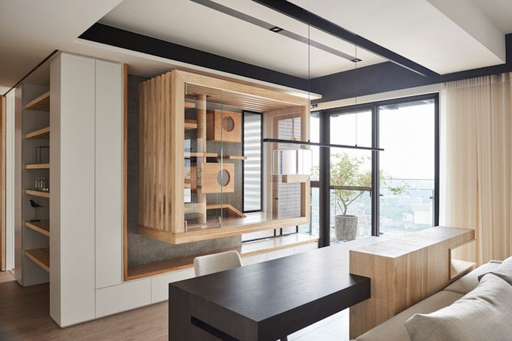
The best cat-friendly homes do not announce themselves with plastic bowls, obvious pet furniture, or a litter tray treated as an unfortunate secret. They work because they understand a cat’s needs as part of the architecture.
A cat does not require a novelty “pet room.” It needs a thoughtful territory: elevated resting places, quiet retreats, scratching surfaces, clear routes through the home, and resources positioned so eating, drinking, sleeping, toileting, and hiding do not compete with one another.
The design rule
Do not design a home around cat equipment. Design it around the cat’s real behaviours—then make the practical elements look as considered as everything else.
Give the room a second horizon.
Cats often seek high resting places from which they can observe a room without standing at its centre. This can be done beautifully: a run of smoked-oak shelving, an upholstered window perch, a stable library ladder, or a tailored cabinet top reached by discreet steps.
The essential detail is access. A dramatic perch that requires an athletic leap may not work for an older cat, a kitten, or a cat with reduced mobility. Provide a practical route up and a comfortable route down. In a home with more than one cat, avoid a single prized perch that can leave one cat feeling cornered.
“A cat does not want to live in your décor. It wants to understand the territory.”
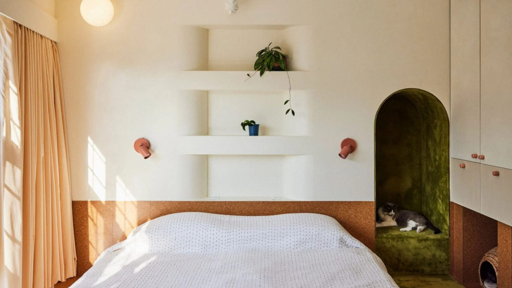
Hide the mechanics, not the cat.
Litter trays, feeding stations, water bowls, and storage can be integrated into a luxurious home, but discretion must never make them difficult to reach or clean. A litter area belongs in a quiet, accessible location—not beside a washing machine, a busy entrance, or a food bowl.
Consider a ventilated cabinet with an easy-clean interior, a tailored bench with a side entrance, or discreet utility millwork. The best solution looks composed from the room while remaining genuinely practical for daily maintenance.
In multi-cat homes, do not create one congested “cat station.” Spread key resources across the residence. Separate choices help cats avoid conflict and make it easier for each animal to access food, water, rest, and toileting areas without feeling watched or blocked.
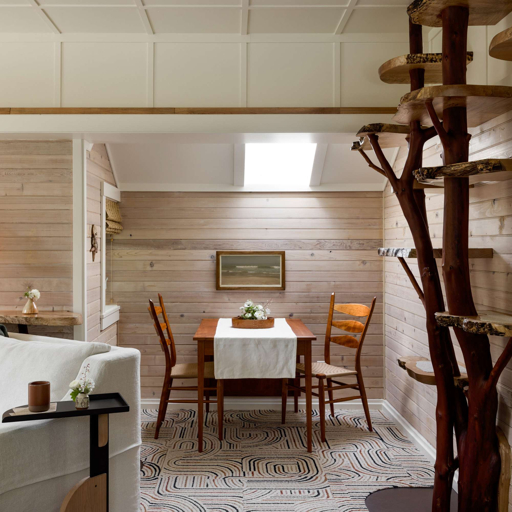
A well-run residence.
A feline-ready home is not a showroom in which everyone must be careful. It is a functioning private world—one that supports a beautiful daily rhythm for every resident. The following decisions make the greatest difference.
Separate the essentials.
Keep litter, food, water, sleeping zones, and scratching areas distinct. A cat reads these as different parts of its territory. Your floor plan should do the same.
Choose surfaces that age well.
Tight-weave performance fabrics, washable covers, durable timber, stone, metal, and robust wool blends often wear more gracefully than delicate materials that demand a museum-level existence.
Keep the daily choreography easy.
Fresh water, clean trays, accessible toys, brief play sessions, and quiet rest matter more than expensive accessories. The finest design supports the routine instead of complicating it.
A truly luxurious home is not a place in which no one can relax. It is a private world in which every resident has somewhere beautiful to belong.
Feline environment notes
-
>
International Cat Care:
Making Your Home Cat Friendly
>
AAFP/ISFM:
Feline Environmental Needs Guidelines
>
Cats Protection:
Toileting Advice for Cats